


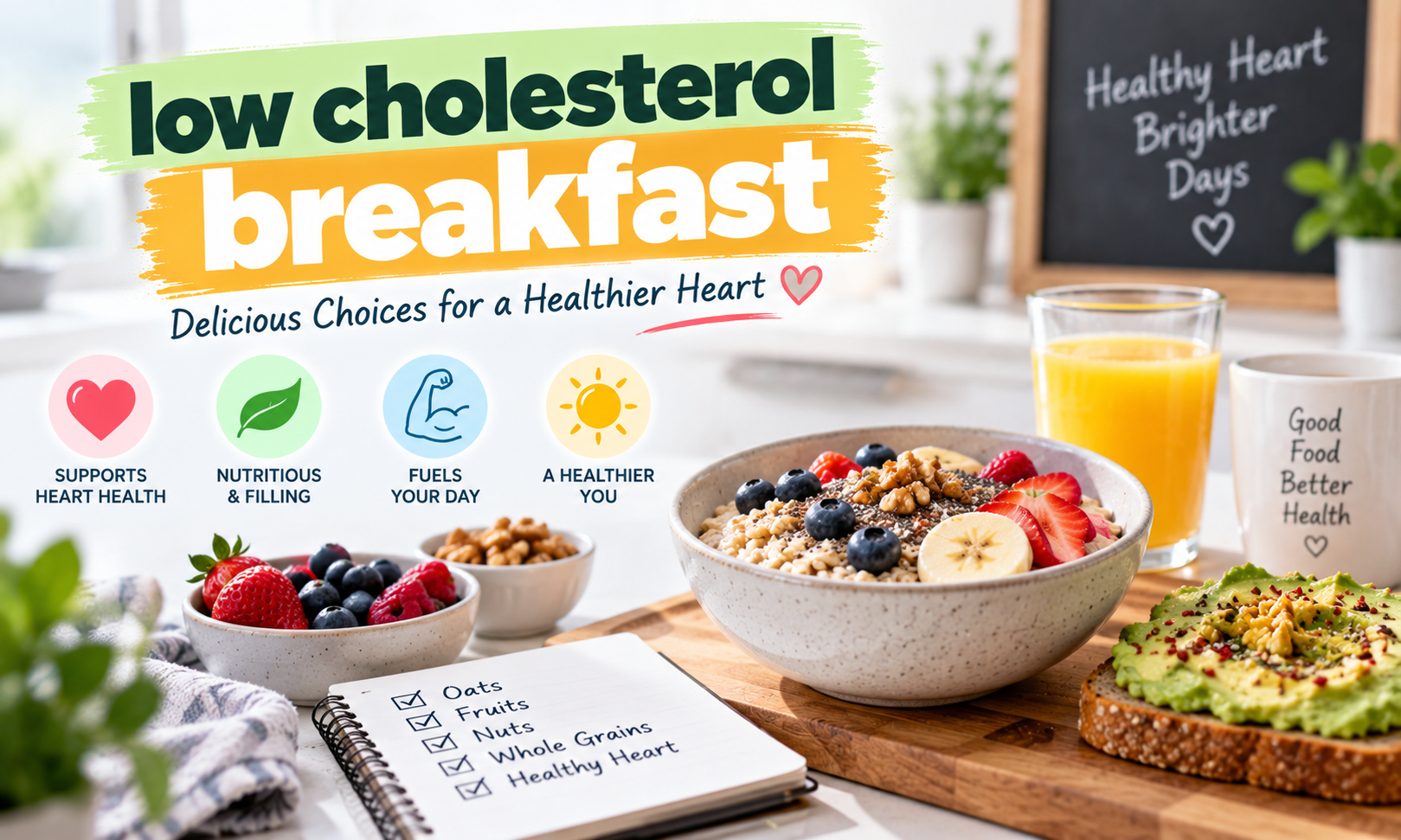
A low cholesterol breakfast can be simple, filling, and satisfying without relying on heavily processed foods or large amounts of saturated fat. For many people trying to improve LDL cholesterol, breakfast is an easy place to add soluble fiber from oats and fruit, choose unsaturated fats from nuts and seeds, and replace high-saturated-fat meats or full-fat dairy with more heart-friendly options.
No single breakfast can fix high cholesterol on its own. The bigger goal is to create a consistent eating pattern that supports healthier LDL levels over time. Current U.S. guidance emphasizes whole grains, fruits, vegetables, beans, nuts, seeds, lean proteins, and unsaturated fats while limiting saturated fat, added sugars, and highly processed foods.
What Makes a Breakfast Good for Cholesterol?
A cholesterol-friendly breakfast usually combines three things: soluble fiber, a source of protein, and a modest amount of unsaturated fat. This combination can make the meal more filling while supporting a heart-healthy eating pattern.
Soluble fiber is especially important because it can reduce the amount of cholesterol absorbed in the digestive tract. Oats, barley, apples, pears, berries, beans, and some seeds are useful breakfast-friendly sources.
The National Heart, Lung, and Blood Institute’s Therapeutic Lifestyle Changes guidance specifically recommends increasing soluble fiber, choosing whole grains, and reducing saturated fat as part of a plan to lower LDL cholesterol.
Which Breakfast Foods Are Best for Lowering LDL Cholesterol?
| Breakfast Food | Why It Helps | Easy Serving Idea | What to Watch |
| Oatmeal or oat bran | Provides beta-glucan soluble fiber | Top with berries and walnuts | Choose unsweetened varieties |
| Berries | Add fiber and antioxidants | Mix into oats or yogurt | Watch sweetened frozen fruit |
| Apples or pears | Provide soluble fiber, especially with skin | Slice over oatmeal or toast | Whole fruit is better than juice for fiber |
| Walnuts or almonds | Provide unsaturated fats and plant protein | Add a small handful to oats | Portions are calorie-dense |
| Chia or ground flaxseed | Add fiber and plant omega-3 fats | Stir into oatmeal or yogurt | Increase gradually with fluids |
| Whole-grain toast | Provides more fiber than refined bread | Top with avocado or nut butter | Check for added sugar and sodium |
| Beans | High in soluble fiber and plant protein | Use in a breakfast bowl | Choose lower-sodium canned options |
| Low-fat plain yogurt | Adds protein with less saturated fat | Pair with oats, fruit, and nuts | Avoid heavily sweetened varieties |
Why Is Oatmeal Such a Strong Breakfast Choice?
Oats are one of the most practical breakfast foods for people trying to lower LDL cholesterol because they contain beta-glucan, a form of soluble fiber. Soluble fiber forms a gel-like material in the digestive tract and can reduce cholesterol absorption.
Mayo Clinic notes that 5 to 10 grams or more of soluble fiber per day can help lower LDL cholesterol. A serving of oatmeal or oat bran can contribute several grams of total fiber before fruit, chia seeds, flaxseed, or nuts are added.
For a current overview of cholesterol-lowering foods, see Mayo Clinic’s cholesterol nutrition guidance.
The biggest mistake with oatmeal is turning it into dessert. Large amounts of brown sugar, syrup, sweetened granola, chocolate chips, or heavy cream can overwhelm the advantages of the oats. Fruit, cinnamon, unsalted nuts, and seeds are usually better everyday toppings.
Are Overnight Oats Good for Cholesterol?
Yes. Overnight oats provide the same basic oat fiber as cooked oatmeal and can be useful for busy mornings.
A simple combination is rolled oats, low-fat milk or an unsweetened fortified plant milk, chia seeds, berries, and a small amount of walnuts. Preparing it the night before makes it easier to avoid drive-through breakfasts or packaged pastries when time is tight.
Check the label on plant milk. Some varieties contain added sugar or coconut oil, which can add more saturated fat than expected.
Are Eggs Bad for Cholesterol?
Eggs can fit into a heart-healthy eating pattern for many people, but the overall meal matters. Current cardiovascular guidance places more emphasis on saturated fat and overall dietary pattern than on dietary cholesterol alone for most people.
A breakfast of eggs cooked in butter with bacon, sausage, cheese, and biscuits is very different from eggs paired with vegetables, whole-grain toast, fruit, and a small amount of olive or canola oil.
If your healthcare professional has given you a specific cholesterol or dietary-cholesterol target because of your medical history, follow that personalized advice rather than a general rule.
What Are Better Protein Choices at Breakfast?
Protein helps make breakfast more filling, but the source matters. Plant proteins, low-fat dairy, egg whites, and moderate portions of whole eggs can fit well into a cholesterol-conscious meal.
Good options include plain low-fat Greek yogurt, unsweetened soy yogurt, tofu scramble, beans, lentils, nut butter, or an egg-and-vegetable breakfast.
Processed breakfast meats such as bacon and sausage are typically higher in saturated fat and sodium. They are better treated as occasional foods than as the default protein every morning.
Which Fats Are Better for a Low Cholesterol Breakfast?
Unsaturated fats are generally better choices than saturated fats when the goal is heart health. Nuts, seeds, avocado, olive oil, canola oil, and many nut butters provide mostly unsaturated fat.
Butter, coconut oil, palm oil, high-fat cheese, cream, and fatty processed meats can add substantial saturated fat. Replacing some of those foods with unsaturated-fat choices can help lower LDL cholesterol.
The American Heart Association’s 2026 dietary guidance for cardiovascular health recommends choosing unsaturated fats in place of saturated fats, emphasizing whole grains, fruits, vegetables, healthy protein sources, and minimally processed foods.
What Does a Balanced Low Cholesterol Breakfast Look Like?
| Breakfast Pattern | Fiber Source | Protein Source | Healthy Fat |
| Oatmeal bowl | Oats + berries | Low-fat milk or soy milk | Walnuts or chia seeds |
| Whole-grain toast plate | Whole-grain bread + fruit | Eggs or tofu | Avocado |
| Yogurt parfait | Oats + berries + fruit | Plain low-fat Greek yogurt | Almonds or flaxseed |
| Savory breakfast bowl | Beans + vegetables + whole grain | Beans or tofu | Avocado or olive oil |
| Smoothie with texture | Berries + oats + chia | Low-fat Greek yogurt or soy milk | Ground flaxseed |
What Are Easy Low Cholesterol Breakfast Ideas?
One of the easiest choices is oatmeal with berries, chopped walnuts, and cinnamon. It combines whole grains, soluble fiber, fruit, and unsaturated fats without requiring much preparation.
Another option is whole-grain toast topped with avocado, tomato, and an egg or tofu scramble. This gives you fiber, protein, and healthy fat while keeping saturated fat relatively low.
A plain low-fat Greek yogurt bowl can work well when topped with fresh fruit, oats, chia seeds, and a few almonds. Choose unsweetened yogurt and add fruit for sweetness.
For a savory breakfast, try black beans with sautéed peppers, onions, spinach, and a small serving of brown rice or a whole-grain tortilla. Add salsa and avocado instead of large amounts of cheese or sour cream.
Can a Smoothie Be a Good Low Cholesterol Breakfast?
Yes, but smoothies can become high in sugar very quickly. A more balanced version uses whole fruit, a protein source, and a fiber-rich ingredient such as oats, chia seeds, or ground flaxseed.
For example, blend unsweetened soy milk, berries, oats, plain low-fat yogurt, and ground flaxseed. Avoid relying on fruit juice, sweetened yogurt, honey, or flavored syrups as the base.
Whole fruit is generally more filling than juice because the fiber remains intact.
What Breakfast Foods Should You Limit if LDL Is High?
| Food to Limit | Why | Better Swap |
| Bacon and sausage | Often high in saturated fat and sodium | Beans, tofu, eggs with vegetables, or lean protein |
| Butter-heavy toast | Adds concentrated saturated fat | Avocado, nut butter, or a small amount of olive-oil spread |
| Full-fat cheese | Can add significant saturated fat | Use smaller portions or reduced-fat options |
| Pastries and doughnuts | Often high in refined carbs, added sugar, and saturated fat | Oatmeal, whole-grain toast, or fruit with yogurt |
| Sugary cereal | Low fiber and high added sugar | Unsweetened oats or high-fiber whole-grain cereal |
| Sweetened coffee drinks | Can add sugar and saturated fat | Coffee with low-fat milk or unsweetened plant milk |
| Coconut-based creamers | Can be high in saturated fat | Check labels and choose lower-saturated-fat alternatives |
How Much Soluble Fiber Should Breakfast Provide?
There is no single required breakfast target, but getting several grams of soluble fiber early in the day can make it easier to reach a heart-healthy daily intake.
NHLBI notes that increasing soluble fiber by about 5 to 10 grams per day can help lower LDL cholesterol. Oats, apples, pears, citrus, beans, and barley are practical sources.
Increase fiber gradually if your current intake is low, and drink enough fluid. A sudden large increase can cause bloating or digestive discomfort.
Is Whole Fruit Better Than Juice for Cholesterol?
Usually, yes. Whole fruit keeps the fiber that is removed or reduced when fruit is processed into juice.
For breakfast, an orange, apple, pear, or bowl of berries provides more texture and fiber than a glass of juice. Juice can still fit into a diet, but it is easier to consume a large amount of sugar quickly without the same fullness.
Can You Eat Dairy on a Low Cholesterol Diet?
Yes. The main question is the type of dairy. Low-fat or fat-free milk and yogurt can provide protein, calcium, and other nutrients with less saturated fat than full-fat versions.
Plain yogurt is generally a better starting point than sweetened yogurt because you can add your own fruit and control the amount of added sugar.
If you use plant-based milk, choose an unsweetened fortified version and check the saturated fat line on the nutrition label. Some coconut-based products are much higher in saturated fat than soy, almond, or oat beverages.
What About Coffee at Breakfast?
Coffee itself is not usually the main cholesterol issue. The additions can be. Large amounts of cream, butter-based coffee drinks, coconut creamers, flavored syrups, and whipped toppings can turn a low-calorie beverage into a high-saturated-fat, high-sugar drink.
If you drink coffee, consider low-fat milk or an unsweetened plant milk and keep added sugar modest.
Some brewing methods can also affect cholesterol-related compounds in coffee. People who drink large amounts of unfiltered coffee may want to discuss that habit with their healthcare professional if LDL is difficult to control.
Is Skipping Breakfast Better Than Eating the Wrong Breakfast?
There is no need to force breakfast if you are not hungry, but skipping breakfast is not automatically a cholesterol-lowering strategy.
The quality of the overall diet matters more than the existence of one meal. If eating breakfast helps you include oats, fruit, whole grains, nuts, or other heart-healthy foods and prevents later overeating, it can be useful.
If you prefer a later first meal, the same principles still apply: focus on fiber-rich plant foods, lean protein, and unsaturated fats while limiting saturated fat and highly processed foods.
Can Breakfast Alone Lower High Cholesterol?
Breakfast can contribute, but it is only one part of the picture. LDL cholesterol is influenced by genetics, age, overall diet, body weight, activity level, smoking, certain medical conditions, and medication use.
Some people can make meaningful improvements through lifestyle changes, while others need cholesterol-lowering medication even with an excellent diet.
If your LDL is very high, if you have diabetes or known cardiovascular disease, or if high cholesterol runs strongly in your family, talk with your healthcare professional rather than relying on dietary changes alone.
How Can You Build a Week of Low Cholesterol Breakfasts?
You do not need seven completely different recipes. A simple rotation can make the plan easier to maintain.
| Day | Breakfast Idea | Heart-Healthy Focus |
| Monday | Oatmeal with blueberries, chia, and walnuts | Soluble fiber + unsaturated fat |
| Tuesday | Whole-grain toast with avocado, tomato, and egg | Whole grains + healthy fat + protein |
| Wednesday | Plain low-fat Greek yogurt with berries and oats | Protein + fiber |
| Thursday | Overnight oats with apple, cinnamon, and flaxseed | Soluble fiber + plant omega-3 |
| Friday | Tofu scramble with spinach and whole-grain toast | Plant protein + vegetables |
| Saturday | Black bean breakfast bowl with salsa and avocado | Legume fiber + plant protein |
| Sunday | High-fiber cereal with low-fat milk and fresh fruit | Convenience + whole grains + fruit |
Frequently Asked Questions About Low Cholesterol Breakfasts
What is the best breakfast for high cholesterol?
A strong option is oatmeal topped with fruit, nuts, and seeds because it provides soluble fiber, whole grains, and unsaturated fats with relatively little saturated fat.
Are eggs okay if I have high cholesterol?
For many people, eggs can fit into a heart-healthy diet. The overall meal and saturated-fat intake matter. Follow any specific advice from your healthcare professional if you have a high-risk medical history.
Can oatmeal lower LDL cholesterol?
Oats contain beta-glucan soluble fiber, which can reduce cholesterol absorption and support lower LDL when eaten regularly as part of a heart-healthy diet.
Is peanut butter good for cholesterol?
Unsweetened peanut butter can be a useful source of mostly unsaturated fat and plant protein. Check labels for added sugar, hydrogenated oils, and portion size.
What cereal is best for cholesterol?
Look for an unsweetened or lightly sweetened whole-grain cereal with several grams of fiber per serving. Oat-based or bran cereals can be useful choices.
Should I avoid all dairy if my cholesterol is high?
No. Low-fat or fat-free dairy can fit into a cholesterol-conscious diet. The main goal is to reduce saturated fat, not automatically eliminate all dairy.
Are breakfast smoothies good for lowering cholesterol?
They can be if they include whole fruit, oats, chia or flaxseed, and a protein source without excessive added sugar. Smoothies based mainly on juice and sweetened ingredients are less helpful.
How quickly can diet change cholesterol levels?
Cholesterol response varies. Some people see measurable changes within weeks to months, while others need medication in addition to lifestyle changes. Repeat testing should follow your healthcare professional’s advice.
Final Thoughts
A low cholesterol breakfast does not need to be complicated. Oats, fruit, whole grains, beans, low-fat dairy, nuts, seeds, avocado, and other minimally processed foods can make breakfast filling while supporting a healthier LDL profile.
The most useful changes are usually simple: add soluble fiber, replace saturated fats with unsaturated fats, choose whole foods more often, and keep added sugar under control.
If your cholesterol remains high despite lifestyle changes, or if you have other cardiovascular risk factors, work with your healthcare professional. Diet is an important part of cholesterol management, but it may need to be combined with medication or other treatment depending on your individual risk.
This article is written for a U.S. audience using nutrition and cholesterol guidance available in October 2026. It is general educational information, not individualized medical advice. People with very high LDL, cardiovascular disease, diabetes, kidney disease, or other medical conditions should follow guidance from their healthcare team.



Discussion about this post