


A concise guide to starting solids, iron-rich foods, allergen introduction, safe textures, foods to avoid, and meal prep
Making homemade baby food can be a simple way to offer your baby a variety of vegetables, fruits, grains, proteins, and healthy fats while controlling texture and ingredients. The key is to match foods to your baby’s developmental readiness, include iron-rich choices, avoid choking hazards, and follow safe preparation and storage practices.
Most babies are ready to begin complementary foods at about 6 months while continuing breast milk or infant formula. Homemade baby food should complement, not replace, breast milk or formula during the first year.
When Is a Baby Ready for Solid Food?
The CDC and American Academy of Pediatrics recommend introducing foods other than breast milk or infant formula at about 6 months. Starting before 4 months is not recommended.
Signs of readiness include sitting with support, controlling the head and neck, opening the mouth for food, swallowing rather than pushing food back out, and showing an ability to move food toward the back of the mouth. The CDC guide to introducing solid foods emphasizes developmental readiness rather than choosing a date alone.
What Should the First Homemade Foods Be?
There is no required order for first foods. Soft vegetables, fruits, iron-fortified infant cereals, beans, lentils, eggs, meat, poultry, fish, plain yogurt, and other age-appropriate foods can all be introduced.
Iron deserves special attention after about 6 months because babies begin needing more iron from food. Good choices include pureed beef or poultry, beans, lentils, tofu, eggs, and iron-fortified infant cereals.
The CDC’s infant iron guidance recommends offering iron-rich foods once solids begin and pairing plant-based iron foods with vitamin C-rich fruits or vegetables to improve absorption.
Simple Homemade Baby Food Ideas
| Food Idea | Texture | Nutrition Focus | Preparation Tip |
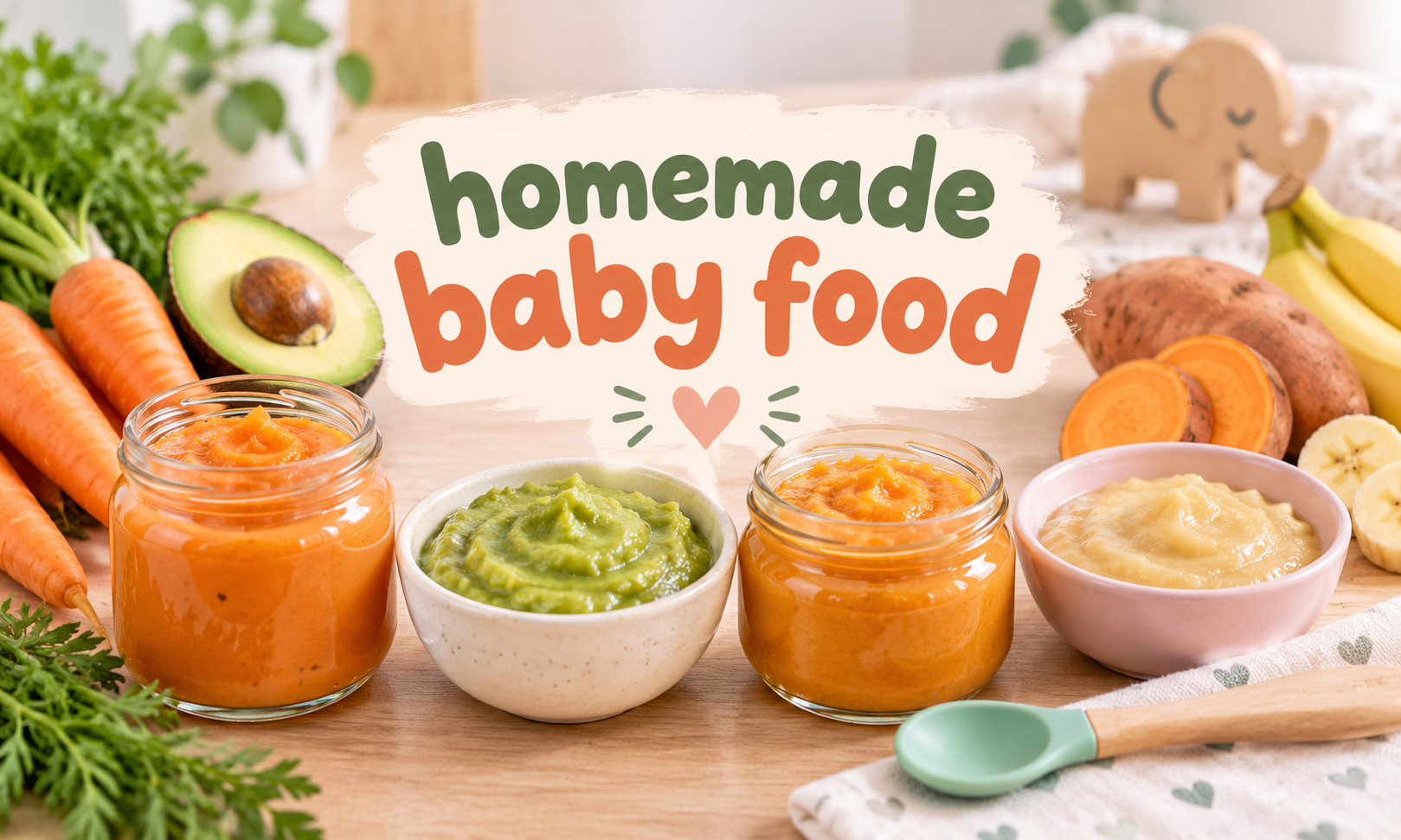
| Sweet potato puree | Smooth puree | Beta-carotene, carbohydrate | Steam or roast until very soft, then blend with water, breast milk, or prepared formula |
| Avocado mash | Soft mash | Healthy fats, fiber | Mash ripe avocado until smooth; thin if needed |
| Lentil and carrot puree | Puree or thick mash | Iron, protein, vitamin C | Cook lentils and carrots until very soft before blending |
| Chicken and squash puree | Smooth to textured | Iron, zinc, protein | Cook chicken thoroughly and blend with soft squash |
| Oat cereal with pear | Soft spoonable cereal | Iron, whole grain, fiber | Use iron-fortified oat cereal and unsweetened cooked pear |
| Egg and avocado mash | Soft mash | Protein, choline, healthy fats | Use fully cooked egg and mash finely |
| Plain yogurt with fruit | Smooth | Protein, calcium | Use pasteurized yogurt with no added sugar |
How Should Texture Change as Your Baby Develops?
Very smooth purees can be useful when a baby first begins solids, but textures should gradually become thicker and lumpier as eating skills improve. By around 7 to 9 months, many babies can handle soft mashed foods and small, soft finger foods under close supervision.
Do not keep every food perfectly smooth for too long. Exposure to different textures helps babies practice chewing movements, tongue control, and self-feeding.
Foods should be soft enough to mash easily between your fingers. Avoid hard, round, sticky, or tough foods that can block the airway.
How Should You Introduce Common Food Allergens?
Current guidance does not recommend delaying foods such as egg, peanut, dairy, wheat, sesame, fish, or soy once a baby is developmentally ready for solids.
The American Academy of Pediatrics’ guidance on introducing allergenic foods notes that introducing common allergens during the complementary-feeding period may be beneficial rather than delaying them.
Use safe forms. Whole nuts are choking hazards. Smooth peanut butter should be thinned with water, prepared formula, breast milk, yogurt, or puree rather than offered as a sticky spoonful.
If your baby has severe eczema, an existing egg allergy, or a history suggesting high allergy risk, ask the pediatrician how and when to introduce peanut and other allergens.
Which Foods Should Babies Avoid?
Do not give honey before 12 months because it can contain spores that cause infant botulism. Avoid foods and drinks with added sugars, and keep sodium low because babies do not need salty foods.
Cow’s milk can be used in small amounts in cooking and pasteurized yogurt and cheese can be introduced before age 1, but cow’s milk should not replace breast milk or infant formula as the main drink until after 12 months.
The CDC list of foods and drinks to avoid or limit also recommends avoiding unpasteurized foods, high-mercury fish, and choking hazards.
How Do You Store Homemade Baby Food Safely?
Wash hands, utensils, cutting boards, blenders, and food processors thoroughly before preparing baby food. Cook meat, poultry, fish, and eggs fully and avoid cross-contamination with raw foods.
FDA guidance says homemade baby food can generally be refrigerated for 1 to 2 days and frozen for about 3 to 4 months. Freezing in small portions, such as covered ice-cube trays or baby-food containers, makes it easier to thaw only what you need.
Never save food that has been partially eaten directly from the baby’s bowl or spoon because saliva can introduce bacteria. Do not leave perishable baby food at room temperature for more than 2 hours.
Can You Reheat Homemade Baby Food?
Yes. Thaw frozen food in the refrigerator, under cold running water, or using a microwave when appropriate. Stir thoroughly after microwaving because hot spots can form.
Check the temperature before feeding. Reheat only the amount you plan to serve, and discard leftovers from the baby’s bowl rather than repeatedly cooling and reheating them.
Is Homemade Baby Formula the Same as Homemade Baby Food?
No. Homemade baby food means age-appropriate complementary foods for a baby who continues breast milk or commercial infant formula.
The FDA strongly advises against homemade infant formula. Homemade formula recipes may provide incorrect amounts of protein, vitamins, minerals, or electrolytes and can become contaminated with harmful bacteria.
If formula availability or cost is a problem, contact your pediatrician, WIC program, or another qualified health professional rather than substituting a homemade formula recipe.
Frequently Asked Questions About Homemade Baby Food
Is homemade baby food healthier than store-bought baby food?
Not automatically. Both can be nutritious. Homemade food gives you control over ingredients and texture, while commercial baby food can be convenient and safely formulated. Variety and overall nutrition matter most.
Can I add salt to homemade baby food?
It is better to avoid added salt for babies. Their sodium needs are low, and naturally occurring sodium in foods is generally sufficient.
Can babies eat eggs at 6 months?
Fully cooked egg can usually be introduced once a baby is developmentally ready for solids. Current guidance does not recommend delaying egg solely to prevent allergy.
Can I freeze homemade baby food?
Yes. FDA guidance allows most homemade baby foods to be frozen for about 3 to 4 months when prepared and stored safely.
Should I introduce one food at a time?
For new eaters, single-ingredient foods can make reactions easier to identify. CDC recommends introducing one new food at a time and allowing several days before another new food when practical.
When can my baby stop eating purees?
As oral skills develop, begin offering thicker mashed foods and soft finger foods. Texture progression should follow the baby’s developmental ability rather than age alone.
Final Thoughts
Homemade baby food can be simple, nutritious, and flexible when it is built around safe textures, iron-rich foods, vegetables, fruits, proteins, healthy fats, and whole grains.
Start solids around 6 months when your baby shows developmental readiness, continue breast milk or infant formula, introduce allergens in safe forms, avoid honey before age 1, and follow careful storage and food-safety practices.
This article is written for a U.S. audience using CDC, FDA, and American Academy of Pediatrics guidance available in October 2026. Feeding needs vary, especially for premature babies, infants with growth concerns, severe eczema, food allergies, swallowing problems, or medical conditions.


Discussion about this post