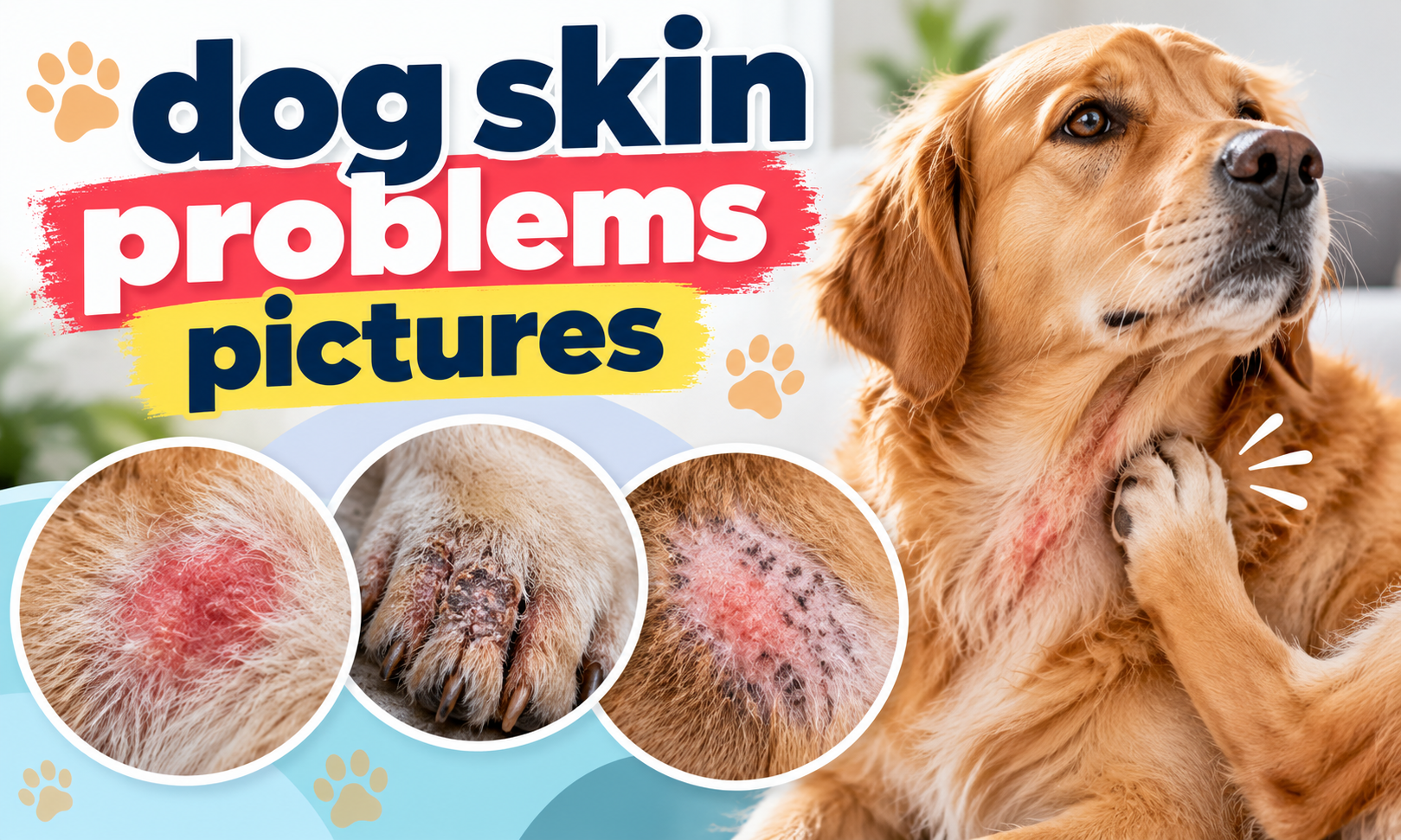
Searching for dog skin problems pictures can help you recognize patterns such as red patches, bald spots, crusts, greasy skin, circular lesions, or raw sores. However, photographs cannot reliably tell you whether the cause is an allergy, parasite, bacterial infection, yeast overgrowth, fungus, or another medical problem. Several dog skin diseases can look almost identical.
The WebMD slideshow of dog skin problems shows common examples including allergic dermatitis, yeast infection, folliculitis, ringworm, mange, fleas, hot spots, and skin tumors. Use pictures as a visual starting point, then let a veterinarian confirm the cause before treatment.
What Can Dog Skin Problem Pictures Tell You?
A picture can show the shape, location, color, and surface of a lesion. It can also help you document whether a rash is spreading, becoming wetter, losing hair, or developing crusts. These details are useful to a veterinarian.
What a picture cannot show is the organism or underlying trigger. A red itchy belly could be allergy, fleas, mites, yeast, bacteria, contact irritation, or a combination. Veterinary testing may include skin scrapings, cytology, fungal testing, flea-comb examination, or biopsy.
What Do Common Dog Skin Problems Look Like?
| Condition | Typical visual clues | Common locations | Contagious? |
| Allergic dermatitis | Red, itchy skin; licking; recurrent rash | Paws, ears, face, belly | No |
| Yeast dermatitis | Red or dark, greasy skin; scale; odor | Ears, paws, folds | Usually no |
| Bacterial pyoderma | Pustules, crusts, circular collarettes, hair loss | Trunk, belly, folds | Usually no |
| Hot spots | Wet, raw, red, rapidly enlarging sore | Head, hips, legs | No |
| Ringworm | Scaly hairless patches, broken hairs, crusts | Face, ears, paws | Yes |
| Sarcoptic mange | Intense itch, crusts, redness, hair loss | Ears, elbows, chest, belly | Yes |
| Demodectic mange | Patchy hair loss, redness, scaling | Face, forelegs, body | Generally no |
| Flea allergy | Scabs, chewing, hair loss | Lower back, tail base, thighs | Fleas spread |
What Does Allergic Dermatitis Look Like?
Dogs with allergies often develop red, itchy skin rather than one distinctive lesion. Repeated licking can stain the paws, while scratching can create scabs, broken hairs, and secondary infection. The ears may also become inflamed.
Food allergy, environmental allergy, flea allergy, and contact irritation can overlap visually. That is why a rash photo cannot identify the allergen by itself.
What Does a Yeast Infection Look Like on a Dog?
Yeast dermatitis often produces itching, redness, scales, crusts, greasy skin, a musty odor, and darkening or thickening in chronic cases. VCA Animal Hospitals’ yeast dermatitis guide notes that the paws, ears, and skin folds are common problem areas.
Yeast normally lives on canine skin. Disease occurs when it grows excessively, often because allergy or another skin problem has changed the skin environment. Microscopic testing can confirm whether yeast is present in abnormal numbers.
What Does Bacterial Pyoderma Look Like?
Superficial bacterial pyoderma can create small bumps, pustules, crusts, scales, and circular areas called epidermal collarettes. The Merck Veterinary Manual pyoderma guide also describes bald patches and scabbing as common signs.
Deep infections can look more serious, with pain, swelling, odor, ulcers, or drainage of blood or pus. Pyoderma often develops because another problem such as allergy, parasites, or hormonal disease has damaged the normal skin barrier.
What Do Hot Spots Look Like?
Hot spots are usually easy to recognize because they can become red, wet, inflamed, painful, and oozy very quickly. VCA’s hot spot guide explains that they may appear on the head, legs, or hips and can enlarge rapidly when a dog keeps licking or scratching.
A hot spot is often a result of self-trauma rather than the original disease. Flea bites, allergies, ear disease, moisture under the coat, or another source of itch may start the cycle.
What Does Ringworm Look Like?
Ringworm is a fungal infection, not a worm. Classic pictures may show circular patches of hair loss with scale or crust, especially on the face, ears, paws, or forelegs. Real cases are not always perfectly round.
Because ringworm can spread to other animals and people, suspicious lesions should be checked rather than treated based on a picture alone. Fungal culture, hair examination, PCR, or other tests may be used.
What Does Mange Look Like on Dogs?
Sarcoptic Mange
Sarcoptic mange usually causes intense itching with red skin, crusts, abrasions, and hair loss. The Merck Veterinary Manual mange guide notes that the ears, elbows, chest, abdomen, and legs are common early sites. This form is highly contagious and can temporarily affect people.
Demodectic Mange
Localized demodicosis often appears as one or several small bald, red, scaly patches, especially on the face or forelegs. Generalized disease can cause extensive redness, hair loss, crusting, darkened skin, and secondary bacterial infection.
Unlike sarcoptic mange, ordinary canine demodicosis is generally not considered contagious between household pets.
What Do Flea Skin Problems Look Like?
Flea allergy dermatitis often causes intense chewing, scabs, broken hairs, and thinning fur around the lower back, rump, tail base, and rear thighs. You may also see flea dirt, which looks like dark pepper-like specks in the coat.
A dog can be highly allergic to flea saliva even when you rarely see an adult flea. Consistent veterinary-approved flea prevention is usually more important than treating the rash alone.
Can You Diagnose a Dog Skin Disease From a Picture?
Usually not with confidence. Allergy can lead to yeast and bacterial infections at the same time. Ringworm can resemble folliculitis. Mange can resemble allergy. Hair loss can result from scratching, parasites, infection, endocrine disease, or immune disease.
Photos are most useful for recording changes and showing the veterinarian what the lesion looked like before clipping, bathing, or applying medication.
When Should a Dog’s Skin Problem Be Seen by a Vet?
Arrange veterinary care when itching is persistent, hair loss is spreading, sores ooze, the skin smells bad, lesions are painful, or the same problem keeps returning. Prompt evaluation is also sensible if another pet or person develops itchy or circular lesions.
Seek faster care for facial swelling, breathing difficulty, widespread blistering, rapidly expanding painful wounds, fever, marked weakness, or a dog that stops eating.
What Should You Avoid Doing at Home?
- Do not use leftover antibiotics, steroid creams, or antifungals without veterinary advice.
- Do not apply essential oils or harsh disinfectants to irritated skin.
- Do not stop flea prevention just because you cannot see fleas.
- Do not repeatedly treat an unidentified lump or sore from an online photo.
- Do not allow constant licking or chewing of a raw lesion if a cone or veterinary barrier is needed.
Frequently Asked Questions About Dog Skin Problems Pictures
What Is the Most Common Cause of Itchy Skin in Dogs?
Allergies and external parasites are common causes, but yeast or bacterial infection may develop secondarily. The distribution of itch plus veterinary testing helps narrow the cause.
Which Dog Skin Problems Can Spread to Humans?
Ringworm can infect people, and sarcoptic mange mites can cause temporary itchy skin lesions in humans. Good hygiene and appropriate veterinary treatment help reduce household spread.
Why Is My Dog Losing Hair in Patches?
Patchy hair loss can occur with mites, ringworm, bacterial infection, allergy-related scratching, hormonal disease, or other conditions. A picture cannot establish the diagnosis.
Are Dog Skin Problems an Emergency?
Most are not emergencies, but breathing difficulty, facial swelling, severe pain, widespread wounds, fever, or major illness need prompt veterinary attention.
What Is the Bottom Line?
Dog skin problems pictures can help you recognize patterns, but many conditions overlap visually. Allergies, yeast, pyoderma, hot spots, ringworm, mange, and fleas can all produce combinations of itching, redness, scale, crusts, odor, or hair loss.
Use photographs as clues, not a diagnosis. The safest approach is to have persistent, spreading, painful, or recurrent skin changes examined so a veterinarian can identify the cause and choose treatment that actually matches it.