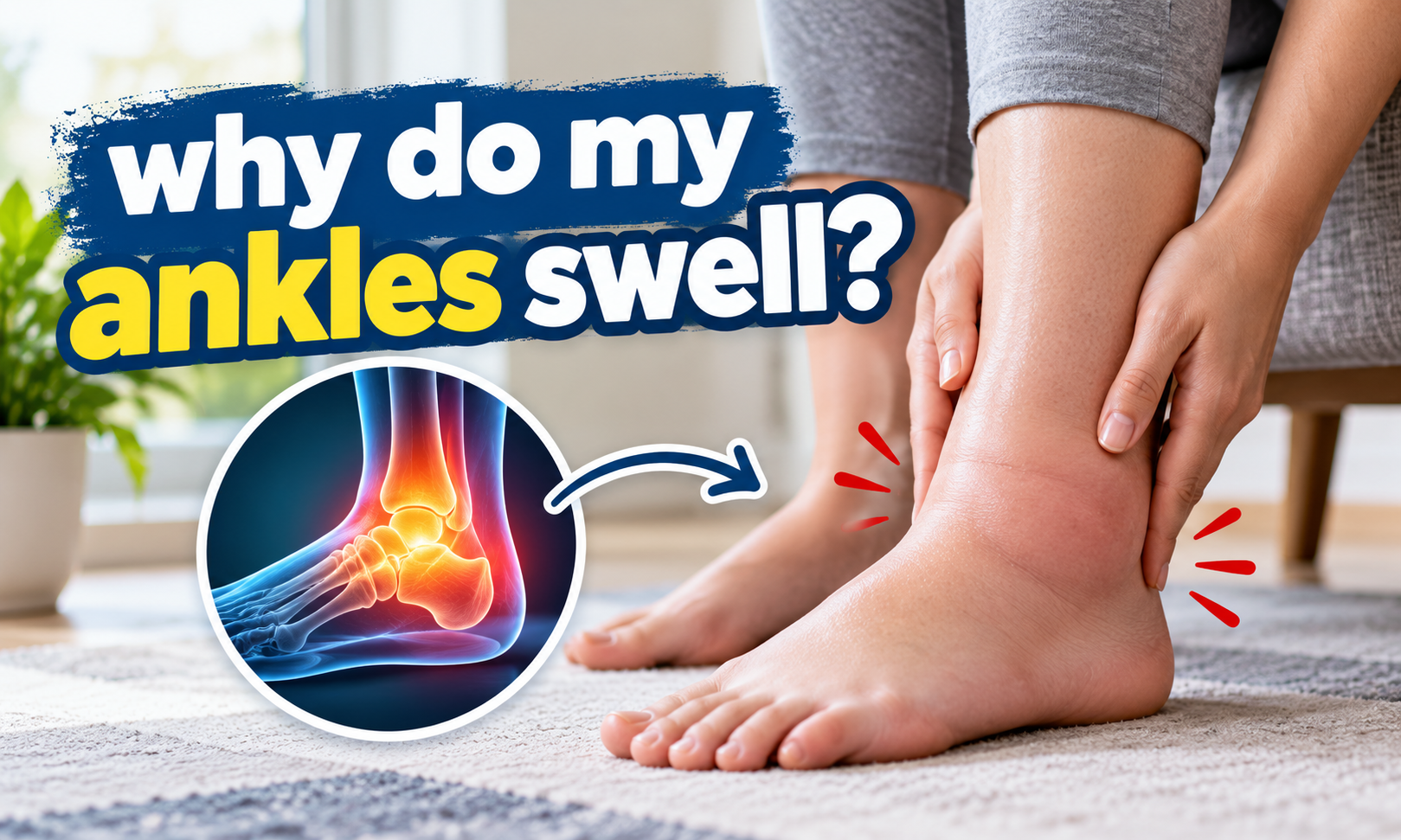
If you are asking why do my ankles swell, the most common explanation is edema, which means fluid has collected in the tissues around the feet, ankles, or lower legs. Mild swelling can happen after standing for hours, sitting during a long trip, eating a salty meal, being pregnant, or spending time in hot weather. However, ankle swelling can also be linked to vein problems, medication side effects, injury, infection, a blood clot, or heart, kidney, or liver disease.
The WebMD guide to swollen ankles and feet describes many of these same causes. The pattern matters: swelling in both ankles after a long day is very different from sudden swelling in one leg with pain, warmth, or redness.
What Causes Swollen Ankles?
| Possible cause | Typical pattern | What else you may notice |
| Long sitting or standing | Usually both ankles, worse later in the day | Heaviness, tight shoes, improves with movement/elevation |
| High salt intake | Usually both sides | General puffiness or temporary weight gain |
| Venous insufficiency | Often both ankles, worse after standing | Varicose veins, skin discoloration, aching |
| Medication side effect | Often both ankles | Starts after a new drug or dose change |
| Injury or infection | Often one side | Pain, redness, warmth, tenderness |
| Blood clot (DVT) | Usually one leg | Sudden swelling, pain, warmth, redness |
| Heart, kidney, or liver disease | Often both legs | May occur with breathlessness, fatigue, abdominal swelling, or other symptoms |
Can Standing or Sitting Too Long Make Ankles Swell?
Yes. Gravity makes fluid collect in the lowest parts of the body, so long periods of standing or sitting can cause temporary ankle swelling, especially after flights, long drives, desk work, or standing-heavy jobs.
MedlinePlus notes that foot, leg, and ankle swelling can occur after prolonged sitting or standing and during long trips. Gentle walking and changing position help the calf muscles pump blood and fluid back toward the heart.
Can Too Much Salt Cause Ankle Swelling?
It can. Sodium encourages water retention, so a salty meal can make shoes or socks feel tighter the next day.
Salt-related swelling is usually mild and affects both sides. Persistent swelling should not automatically be blamed on diet, especially if it keeps returning or appears with other symptoms.
What Is Venous Insufficiency?
Leg veins contain valves that help blood move upward. If they weaken, blood can pool in the lower legs and cause chronic venous insufficiency.
Swelling is often worse after standing and better after lying down with the legs elevated. Varicose veins, aching, heaviness, brownish skin changes, or itchy lower-leg skin may also develop.
Can Medicines Make Your Ankles Swell?
Yes. Some blood-pressure medicines, especially calcium channel blockers, can cause ankle edema. Other possible medication-related causes include steroids, hormones, some antidepressants, anti-inflammatory drugs, and certain diabetes medicines.
Do not stop a prescription drug because you think it is causing swelling. Ask the prescriber whether the timing fits and whether a dose adjustment or alternative is appropriate.
What Does It Mean if Only One Ankle or Leg Is Swollen?
One-sided swelling deserves more attention because it can come from an injury, infection, or blocked vein. A sprain may swell around a painful joint, while cellulitis can make skin red, warm, and tender.
A deep vein thrombosis, or DVT, is a blood clot in a deep leg vein. It can cause sudden swelling, pain, warmth, or color change in one leg, although symptoms are not always dramatic.
When Is One-Sided Swelling Urgent?
The NHS guidance on ankle and leg swelling recommends urgent medical assessment for unexplained swelling in one leg, especially if the swelling is severe, painful, sudden, red, or hot. A clot can become life-threatening if it travels to the lungs.
Can Heart, Kidney, or Liver Problems Cause Swollen Ankles?
Yes. When the heart, kidneys, or liver cannot manage fluid normally, excess fluid can collect in both legs and ankles and may extend into the calves.
Heart failure may also cause shortness of breath, reduced exercise tolerance, or difficulty breathing when lying flat. Kidney disease can cause swelling in the legs or around the eyes, while advanced liver disease may cause swelling in the legs and abdomen. These symptoms need medical evaluation rather than home treatment alone.
What Is Pitting Edema?
Pitting edema means a dent remains briefly after pressing the swollen skin. It shows fluid in the tissues but does not identify the cause.
According to Cleveland Clinic’s edema overview, edema can be localized around an injury or more generalized when a medical condition affects fluid balance. Whether swelling pits is useful information to tell a clinician, but it is not a diagnosis by itself.
Why Do Ankles Swell During Pregnancy?
Mild swelling of both ankles is common during pregnancy because blood volume rises and the growing uterus increases pressure on leg veins.
Sudden or severe swelling is different. New swelling involving the face or hands, especially with headache, vision changes, upper-abdominal pain, or high blood pressure, can be a sign of preeclampsia and requires urgent obstetric assessment.
What Can Help Mild Ankle Swelling at Home?
- Raise your legs when resting, ideally so the ankles are above heart level.
- Take regular walking or movement breaks if you sit or stand for long periods.
- Avoid tight socks, shoes, or clothing that restricts the legs.
- Reduce very salty foods if sodium appears to make swelling worse.
- Wear comfortable footwear and keep swollen skin clean and moisturized.
- Ask a clinician whether compression stockings are appropriate if swelling is recurrent.
Compression stockings can help some types of venous swelling, but they are not appropriate for every circulation problem. If swelling is new, severe, one-sided, or unexplained, get the cause assessed before relying on compression.
When Should Swollen Ankles Be Checked by a Doctor?
Make an appointment if swelling has no obvious cause, keeps returning, lasts several days despite self-care, or is worsening. Also seek advice if you have heart, kidney, liver, or vein disease and the swelling changes.
A clinician may review your medications, examine the heart and lungs, check blood and urine tests, or order an ultrasound of the leg veins depending on the pattern.
Which Symptoms Need Emergency Care?
- Shortness of breath or difficulty breathing
- Chest pain, pressure, or tightness
- Coughing up blood
- Fainting, severe lightheadedness, confusion, or clammy skin
- Sudden one-sided leg swelling with pain or warmth
These symptoms can occur with a blood clot in the lungs, serious heart problems, or another urgent condition. Seek emergency medical care rather than trying to reduce the swelling at home.
Frequently Asked Questions About Swollen Ankles
Why Are My Ankles Swollen at the End of the Day?
Gravity and prolonged standing commonly cause fluid to pool in the ankles by evening. Recurrent, painful, or skin-changing swelling deserves medical review.
Why Do My Ankles Swell After a Flight?
Sitting with the legs down for hours reduces the normal calf-muscle pumping that helps return blood and fluid upward. Walking periodically and moving the ankles can help. New one-sided swelling or pain after travel needs assessment for a possible blood clot.
Can Dehydration Cause Swollen Ankles?
Dehydration is not one of the main causes of persistent ankle edema. Swelling is more commonly related to gravity, salt, veins, medications, pregnancy, inflammation, or medical conditions affecting fluid balance.
Will Drinking More Water Reduce Ankle Swelling?
Not necessarily. Normal hydration is important, but swelling has many causes. If a clinician has told you to limit fluids because of heart or kidney disease, follow that plan rather than increasing water intake on your own.
What Is the Bottom Line?
Swollen ankles are often caused by temporary fluid buildup after prolonged sitting, standing, travel, heat, pregnancy, or a salty meal. They can also result from venous insufficiency, medication side effects, injury, infection, blood clots, or heart, kidney, and liver disease.
The pattern is the key clue. Mild swelling in both ankles that improves with movement and elevation is usually less urgent than sudden unexplained swelling in one leg. Chest pain, shortness of breath, coughing up blood, or faintness with leg swelling requires emergency care.